
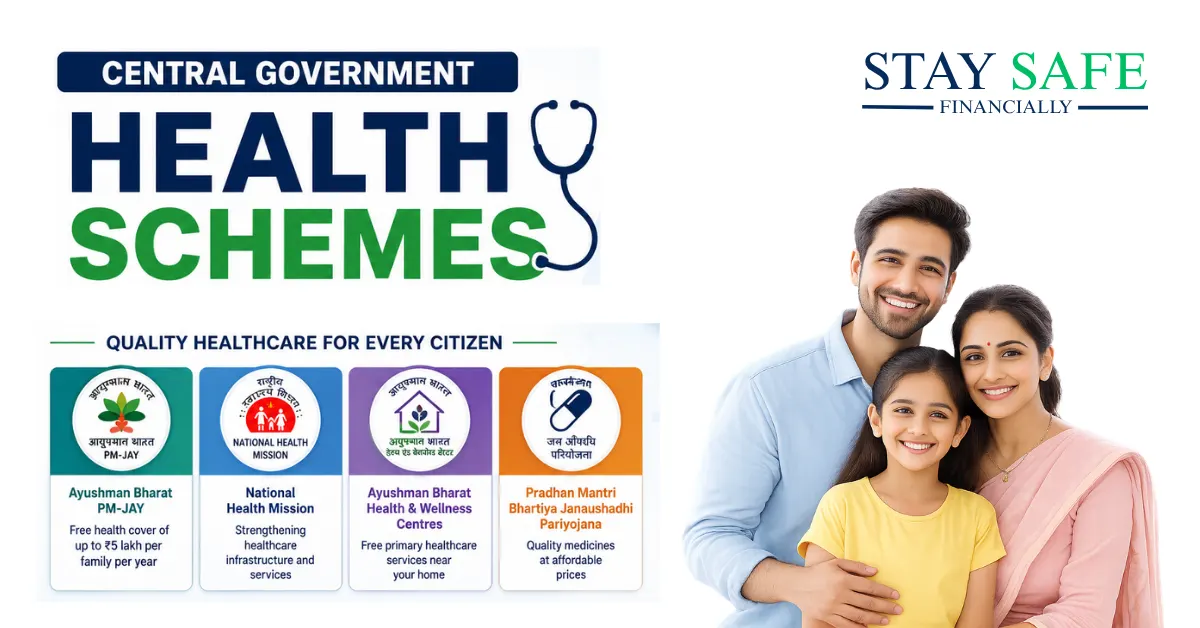
CGHS explained: eligibility, benefits, free medical facilities, coverage, and hospitals. Complete guide to Central Government Health Scheme.
Introduction to CGHS (Central Government Health Scheme)
Did you know that Central Government employees and their families can receive free medical treatment for life? Yes, indeed! Today, we will be discussing the CGHS, the Central Government Health Scheme, which offers a host of amazing facilities. So, without wasting any time, let’s get started.
Table of Contents
What is Central Government Health Scheme?
The CGHS stands for the Central Government Health Scheme.
Launch and Background of CGHS
This scheme was launched under the aegis of the Ministry of Health and Family Welfare in 1954.
Objectives of the CGHS Scheme
What are the objectives of the CGHS?
Primary Objective of CGHS
Its primary objective is to provide medical care to Central Government employees, pensioners, and their dependents, specifically those residing in cities covered under the CGHS network.
Scope of Healthcare Coverage
In other words, it aims to provide comprehensive, complete, and total healthcare facilities to individuals currently in government service (or those who have retired) and their families.
Who is Covered Under Central Government Health Scheme?
Central Government servants who draw their salaries from the Civil Estimates are covered.
Employees Not Covered
However, Railway employees are not covered under this scheme, nor is the Delhi Police. All other Central Government servants are covered.
Pensioners of the Central Government
Next are pensioners, those who receive a pension from the Central Government. Even if they do not reside in a CGHS-designated city, they can still obtain a CGHS card from the nearestCentral Government Health Scheme city.
VIPs and High-Ranking Officials
The scheme also covers VIPs and high-ranking officials, such as Honorable Members of Parliament, and Honorable Judges (whether of the Supreme Court or a High Court).
Other Eligible Categories
It further extends coverage to former Members of Parliament, former Governors, former Vice Presidents, former Prime Ministers, former Judges, freedom fighters, and the employees and pensioners of certain autonomous bodies, such as AIIMS, among others.
Medical Systems Provided Under CGHS
What type of medical system does the CGHS provide?
Allopathy (Modern Medicine)
This scheme offers a multi-system approach to healthcare, encompassing a wide range of services such as Allopathy, which is commonly known as modern medicine.
Traditional and Alternative Systems
Ayurveda, Homeopathy, Unani, Siddha, and Yoga. For example, if someone suffers from high blood pressure or diabetes, they may consult an allopathic doctor. However, if they prefer natural remedies, the options of Ayurveda or Homeopathy are also available to them.
Components of the CGHS Scheme
Next, let us look at the components of this scheme. What exactly are the various components of the CGHS scheme?
Dispensary Services
The first is Dispensary Services. Dispensary services are provided at these centers;
OPD and Home Visit Services
this includes both Outpatient Department (OPD) services and home visits, whenever necessary.
Family Welfare and Maternal & Child Health
Family Welfare, as well as Maternal and Child Health services, are also provided, for instance, comprehensive care during pregnancy. Guidance regarding family planning is also offered.
Specialist Consultation and Diagnostic Facilities
Next, specialist consultation facilities are provided. At the dispensary, polyclinic, or hospital level, facilities such as X-rays, ECGs, and laboratory tests are made available.
Medicine Supply and Health Education
Regarding Medicine Supply, essential medicines and medical appliances are provided; furthermore, under the banner of Health Education, beneficiaries are educated about health-related matters as part of this scheme.
Facilities Provided Under CGHS
Now, let us examine the specific facilities offered by Central Government Health Scheme.
OPD Care
Care: Doctors are available at the dispensaries to conduct check-ups.
Free Medicines
Free Medicines: Essential medicines are provided at no cost, that is, completely free of charge.
Laboratory Services
Laboratory Services: Services such as blood tests, urine tests, and ECGs are conducted free of cost.
Domiciliary (Home) Visits
Domiciliary Visits: For elderly or bedridden patients, doctors conduct home visits to provide treatment.
Hospitalization Facilities
Hospitalization: The scheme facilitates admission to government and private hospitals that are approved under the CGHS panel, for example, AIIMS or Apollo, provided they are part of the CGHS network.
Specialist Consultations
Next, Specialist Consultations: Services involving specialists such as cardiologists, orthopedists, and ENT specialists are also provided.
Vaccination and Immunization Services
Finally, vaccination, or as it is also known, immunization services are included. Vaccinations for both children and adults, such as those for tetanus, hepatitis, etc., are also provided.
Antenatal and Postnatal Care
Next is antenatal and postnatal care; under this scheme, care is provided both during pregnancy and after delivery.
Emergency Medical Services
Facilities for medical emergencies, specifically limited medical services such as those for cardiac arrest or accidents, are also available here, ensuring that care is provided during such critical moments.
Medical Appliances Provided
Medical appliances, including pacemakers, hearing aids, nebulizers, and similar devices, are also provided under this scheme. For instance, if an elderly individual requires a hearing aid, they can obtain it through Central Government Health Scheme.
AYUSH and Yoga Services
Services related to Ayurveda, Unani, Siddha, and Homeopathy, such as herbal treatments and yoga consultations, are likewise provided as part of these facilities.
Family Planning and Health Education
Furthermore, support for family planning and health education, including contraceptive advice, tubectomy, and vasectomy services, is also made available.
Summary of CGHS Scheme
CGHS, in short, stands for Central Government Health Scheme. What does it entail? CGHS employees and pensioners are provided health services, including dispensary services, equipment, lab services, immunization services, home visits, and pregnancy care to maintain good health. I hope you all understand this well.
Frequently Asked Questions (FAQs) on CGHS
1. What is CGHS and who runs it?
CGHS stands for Central Government Health Scheme. It is a healthcare scheme run by the Ministry of Health and Family Welfare, Government of India, to provide medical facilities to eligible beneficiaries.
2. Who is eligible to get CGHS benefits?
CGHS benefits are available to Central Government employees, pensioners, and their dependents. It also covers MPs, judges, freedom fighters, and certain autonomous body employees.
3. Are CGHS medical services completely free?
Yes, most services under CGHS are free of cost, including OPD consultations, essential medicines, laboratory tests, and hospitalization in CGHS-empanelled hospitals.
4. Can CGHS pensioners living outside CGHS cities avail benefits?
Yes. Pensioners can obtain a CGHS card from the nearest CGHS city, even if they reside in a non-CGHS area, subject to applicable rules.
5. What types of treatment systems are available under CGHS?
CGHS provides treatment through multiple medical systems, including Allopathy, Ayurveda, Homeopathy, Unani, Siddha, and Yoga (AYUSH).
TATA Neu Credit Card Benefits & Charges
TATA Neu credit card offers 10% cashback on Tata brands, lounge access, UPI rewards & ₹1,499 bonus. Is it worth applying?
My Finance Policy
MyFinancePolicy.com aims to be your trusted voice. We are a knowledge-driven platform dedicated to providing clear, practical, and up-to-date information on topics that matter to every Indian investments, insurance, credit cards, and government schemes.